
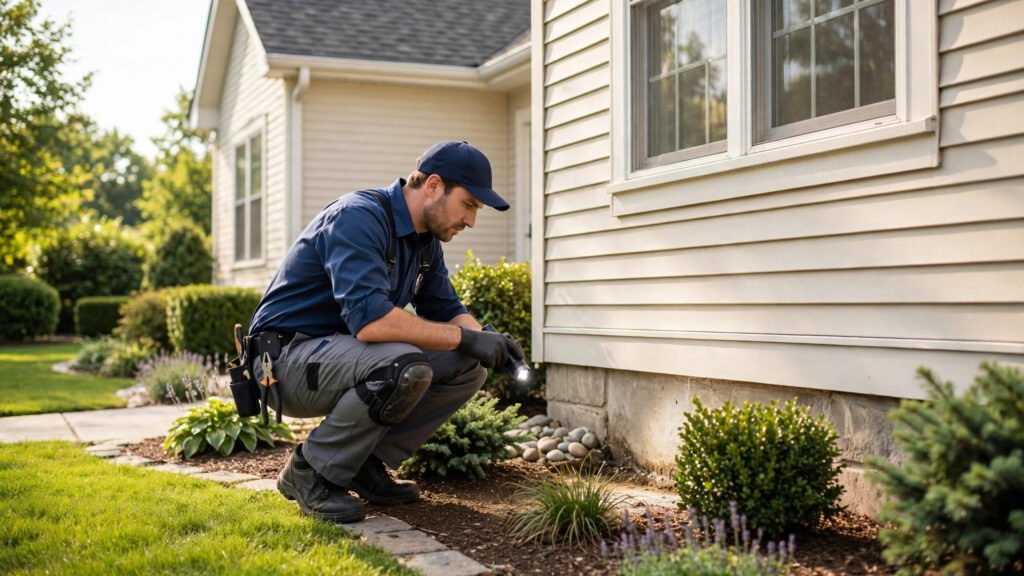
Ants marching across the kitchen counter, scratching inside the walls at night, tiny moths in the pantry — most homeowners face these unwelcome moments sooner or later. Pests do more than annoy: termites can quietly damage a home’s structure, rodents can chew through wiring, and cockroaches can contaminate food. Effective pest control is not about spraying chemicals at everything that moves — it is about identifying what you are dealing with, removing what attracts it, and using targeted, responsible methods to keep it out.
This guide is your starting hub: each section explains the key principles, then links to our in-depth guides for the most common pest problems in and around the home.
Understanding Integrated Pest Management (IPM)
Professionals rely on a framework called Integrated Pest Management (IPM), and it works just as well for homeowners. Instead of reaching for a pesticide first, IPM follows a ladder of responses from least to most intensive:
- Inspect and identify. Different pests need completely different treatments — a “moth” in the closet and a “moth” in the pantry are different species with different solutions. Confirm what you are dealing with before you act.
- Prevent. The most powerful pest-control tool is exclusion: sealing cracks and gaps, fixing screens, storing food in airtight containers, and removing clutter. Most infestations start with an open invitation — remove it and you prevent most problems without chemicals.
- Monitor. Sticky traps, pheromone traps, and visual checks tell you whether you have a few stray insects or a growing population, and whether your efforts are working.
- Control, starting with the least toxic option. Vacuuming, trapping, removing food sources, and fixing moisture come first. If pesticides are needed, use targeted products exactly where pests travel — never broadcast sprays “just in case.”
- Evaluate. Did the problem shrink? If not, reassess the identification and entry points rather than applying more product.
Four habits underpin everything below: seal entry points, cut food and water access (fix leaks, store dry goods in sealed containers, empty trash regularly), reduce clutter (cardboard boxes and piled newspapers are five-star pest hotels), and maintain the exterior (trim branches away from the roof, keep mulch off the foundation, move firewood away from the house).
Common Household Insects
Indoor insects thrive on the same three things — food, moisture, and hiding places — so sanitation and sealing fix a surprising number of insect problems before any treatment is needed.
How to Get Rid of Cockroaches in the Kitchen Permanently (Step-by-Step)
Cockroaches hide in warm, dark, moist spots near food — under sinks, behind appliances, inside cabinets. Our step-by-step guide covers sanitation, sealing entry points, and targeted baiting, plus sticky-trap monitoring so you know the population is truly gone.
Does One Cockroach Mean an Infestation? What to Do Next
Is a single roach, especially at night, a stray or a sign of a hidden population? This guide shows how to read the clues — droppings, egg cases, timing, location — so you respond proportionally instead of panicking or ignoring it.
How to Get Rid of Ants Naturally: The Borax Bait Method That Actually Works
Killing visible ants does nothing if the colony survives — foragers must carry bait back to the queen. This guide covers how to mix and place borax bait stations correctly and how to keep bait away from kids and pets.
How to Get Rid of Silverfish in the Bathroom for Good
Silverfish are drawn to damp bathrooms where they feed on paper, glue, and starchy materials. This guide shows how reducing humidity, fixing leaks, and sealing baseboards work together with traps to end the problem for good.
How to Check for Bed Bugs in a Hotel Room (5-Minute Inspection)
Bed bugs are hitchhikers, and hotels are one of the most common places people pick them up. This five-minute inspection routine — mattress seams, headboard, luggage rack — can save you from bringing them home in your suitcase.
How to Get Rid of Pantry Moths: The Complete Deep-Clean Method
Pantry moths start in dry goods — flour, rice, cereal, pet food — where sprays can’t reach the larvae. The fix is the complete deep-clean method: discard infested products, scrub shelves, and use pheromone traps to confirm you caught them all.
Clothes Moths in Your Closet? How to Get Rid of Them for Good
Tiny holes in wool, silk, and cashmere mean clothes moth larvae are feeding in your closet. This guide shows how to find them, treat stored clothing, and use pheromone traps and proper storage to protect your wardrobe.
Booklice in Your New Home? What They Are and How to Get Rid of Them
Booklice are tiny, pale insects that feed on mold and mildew in damp new homes — a moisture problem wearing a bug costume. Lowering humidity and removing mold food sources eliminates them without heavy treatment.
How to Get Rid of Earwigs in Your House (Traps That Actually Work)
Earwigs slip inside through damp entry points and love basements, bathrooms, and laundry rooms. This guide covers simple oil and rolled-newspaper traps that genuinely catch them, plus the moisture and sealing fixes that keep them out.
How to Get Rid of House Centipedes (and Why They’re in Your Bathroom)
House centipedes look alarming but are actually hunting the other pests in your home — their presence usually means a moisture and prey problem. This guide explains why they appear in bathrooms and basements and how reducing humidity and sealing gaps removes them.
How to Get Rid of Crickets in the Basement for Good (7 Methods)
Crickets chirp all night, damage fabrics, and thrive in damp basements and crawl spaces. These seven methods combine moisture reduction, sealing, and trapping so you can silence them without foggers.
How to Get Rid of Spiders in the Basement (Without Chemicals)
Spiders in the basement signal other insects living there — remove the prey and clutter, and most spiders leave on their own. This guide covers non-chemical methods: decluttering, sealing, vacuuming egg sacs, and reducing moisture.
Fall Invaders
When temperatures drop, certain insects try to move indoors to overwinter — often clustering on sunny exterior walls before squeezing through tiny gaps around windows and vents. Act before they get inside: seal entry points in late summer and early fall.
How to Keep Stink Bugs Out of Your House This Fall
Stink bugs gather on warm, sun-facing walls in fall, and crushing them releases their infamous odor. This guide shows how to keep them out with sealing and screens, and how to remove indoor ones without the smell.
How to Get Rid of Boxelder Bugs (Inside and Out)
Boxelder bugs cluster by the hundreds on homes near boxelder, maple, and ash trees, then slip inside through window frames and siding gaps. Learn how exterior vacuuming, sealing, and tree-trimming cut the population.
Ladybugs Invading Your House? How to Get Them Out (Fall Guide)
Asian lady beetles — often called ladybugs — swarm sun-warmed walls in fall and push through the tiniest cracks. This fall guide covers prevention timing, sealing hotspots, and gentle removal for beetles already indoors.
Rodents
Mice can squeeze through a gap the size of a dime, and once inside they gnaw wiring, contaminate food, and reproduce fast. Rodent control is mostly about exclusion and trapping — misused poisons can create worse problems, including risks to pets and wildlife.
How to Get Rid of Mice in Walls (Without Tearing Your House Apart)
Scratching inside walls means mice are traveling through wall voids — no demolition needed to stop them. This guide shows how to locate their routes, place snap traps strategically, and seal the exterior gaps they used.
How to Keep Mice Out of Your Garage (Entry Points + Storage Fixes)
Garages are mouse magnets: pet food, grass seed, cardboard boxes, and the gap under the door. This guide maps the common entry points and shows how storage fixes and door seals make the space far less inviting.
How to Keep Squirrels Out of the Attic (Humane Exclusion Guide)
Squirrels in the attic chew wood, insulation, and wiring — and can enlarge a small roof gap into a wide-open door. This humane guide explains one-way doors that let squirrels leave but not re-enter, plus how to seal the roofline.
Outdoor & Wildlife Pests
Some pest problems start outside the house entirely — in the yard, on the deck, or at the trash cans. Managing these animals humanely usually means removing what attracts them rather than trapping or relocating them, which often fails or is restricted by local law.
How to Keep Wasps Away From Your Deck and Patio
Wasps ruin outdoor meals and sting when their nests are threatened. This guide covers how to make your deck less attractive to foraging wasps, when to remove small early-season nests yourself, and when a nest’s size means calling a professional.
How to Get Rid of Moles in Your Yard (Traps vs. Repellents)
Mole tunnels and mounds wreck lawns, but many mole “repellents” have little evidence behind them. This honest traps-versus-repellents comparison helps you choose a method that actually works for your situation and local regulations.
How to Keep Raccoons Out of Your Trash Cans (7 Fixes That Work)
Raccoons are clever, persistent, and strong — a simple bungee cord rarely stops them for long. These seven tested fixes, from locking lids to securing the cans, end the nightly trash raids without harming the animals.
Termites: Know the Signs
Termites cause enormous property damage each year, and they work quietly — a colony can feed on your home’s wood for years before you notice. Early detection is everything. Watch for mud tubes along foundations, hollow-sounding wood, discarded wings near windows, and frass (droppings that look like sawdust).
How to Check for Termites Yourself: The 15-Minute DIY Inspection
A flashlight and fifteen minutes are enough to check the highest-risk areas around your foundation, crawl space, and wooden structures. This guide shows exactly where to look, what each warning sign means, and when to call a professional.
Pest Control Safety: Pets, Products, and When to Call a Pro
Every pesticide product carries a label with legal force — it tells you where the product may be used, how much to apply, what protective equipment to wear, and how long to keep children and pets away. Always read the entire label and follow it exactly. Wear the required protective equipment (often gloves, sometimes eye protection or a mask), keep products in their original containers, and store them locked away from children and pets. Never mix products unless the label says to, and never exceed the labeled rate.
If someone is exposed to a pesticide and shows symptoms, or a child or pet ingests a product, call Poison Control at 1-800-222-1222 right away, and keep the product label with you when you call.
Prefer lower-toxicity approaches where they will do the job: boric acid baits, diatomaceous earth, and physical traps can handle many common problems with less risk than broad-spectrum sprays — but no method works for every situation, and even low-toxicity products demand correct placement and label compliance.
Is Pest Control Safe for Pets? 7 Questions to Ask Before Treatment
Pets are more vulnerable than people to many pest-control products because of their size, grooming habits, and curiosity. Before any treatment — DIY or professional — these seven questions cover ingredients, re-entry times, and safer alternatives.
Call a professional when you find termite signs or structural damage, a wasp nest is large or in a wall void, wildlife is inside the living space, bed bugs are confirmed, or your own efforts haven’t worked after a few weeks. Get multiple quotes, ask about their products and IPM approach, and confirm they are licensed in your state.
Your Year-Round Pest Prevention Checklist
- Spring: Inspect the foundation and roofline for gaps; clean gutters; repair window screens; trim tree branches back from the roof.
- Summer: Keep trash sealed; manage standing water; check the attic and crawl space for droppings or nesting.
- Fall: Seal cracks around windows, doors, and utility penetrations; store summer gear in sealed bins; move firewood away from the house.
- Winter: Inspect the basement and attic monthly for rodent signs; keep food in sealed containers.
Pest control works best as a routine, not a reaction. Start with the principles in this guide — inspect, identify, prevent, monitor, treat with the least-toxic effective method — then dive into the detailed guides above for your specific pest.